
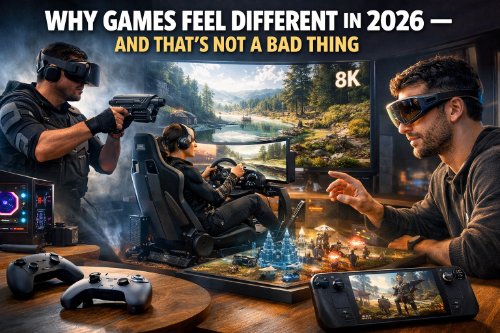

Gaming has changed a lot over the years, but lately it feels like we’ve entered a new phase. Not just better graphics or bigger worlds, but a different way games are built, played, and experienced. Some people love it, some people hate it, but one thing is certain, the gaming landscape in 2026 is very different from what it used to be.
Bigger Worlds, But Also Busier Ones
One thing that stands out today is how massive modern games have become. Open worlds aren’t just big anymore, they’re filled with systems, events, and mechanics layered on top of each other. Sometimes it feels like developers are trying to build entire ecosystems rather than just a game.
For some players that’s exciting. There’s always something to do, somewhere to explore, and usually multiple ways to approach the same situation. But at the same time, it can also feel overwhelming. Not everyone wants to log in and feel like they need a checklist just to start playing.
There’s definitely a balance that developers are still trying to figure out.
Live Service Games Aren’t Going Anywhere
Love them or hate them, live service games are now a major part of the industry. Updates, seasons, new content drops, the idea that a game continues evolving after launch is now the norm rather than the exception.
When it works well, it keeps communities alive for years. Players come back for new events, new maps, and new content that keeps the experience fresh.
But when it doesn’t work, it can feel like games launch unfinished, with players essentially waiting months or years for features that should have been there on day one.
It’s a model that clearly isn’t disappearing anytime soon, but players are becoming more vocal about how it’s handled.
Graphics Are Incredible… But Gameplay Still Matters
It’s impossible not to notice how good games look now. Lighting, physics, facial animation, modern engines can create scenes that look almost cinematic. But there’s something interesting happening at the same time. Some of the most popular games right now aren’t chasing realism at all. Stylized graphics, indie titles, and smaller studios are producing games that don’t necessarily look “next-gen,” but they focus heavily on gameplay and creativity. And players are responding to that. In many cases, a fun idea beats ultra-realistic graphics every time.
Communities Are Driving Games More Than Ever
One of the biggest shifts in gaming today is how much influence communities now have. Between Discord, Twitch, YouTube, and forums, players aren’t just consuming games anymore, they’re shaping them. Developers watch feedback closely. Mods extend the life of games far beyond their original release. Streamers and content creators can suddenly push a game into massive popularity overnight. Sometimes a game becomes successful not because of marketing, but because the community simply decides it’s worth playing.
And honestly, that’s one of the most exciting parts of modern gaming.
So, Where Is Gaming Heading Next?
If there’s one thing that’s clear, it’s that gaming isn’t slowing down. New technology, new ideas, and new ways to play are constantly appearing.
But despite all the changes, the core of gaming hasn’t really moved.
People still play for the same reasons they always have:
- To explore new worlds
- To challenge themselves
- To relax after a long day
- To share experiences with others
Whether it’s a huge AAA release, a competitive online title, or a small indie game that suddenly explodes in popularity, the goal is still the same, have fun. And honestly, that part of gaming will probably never change.
What do you think?
Do modern games feel better or worse than they did 10 years ago? Join the discussion and share your thoughts below.